Voiceover vs On-Camera: Which Performs Better in India
Faceless voiceover content scales faster; on-camera builds trust faster. The honest trade-off, with the numbers that decide it.
Summary — the short answer
- Voiceover scales faster and is far easier to batch; on-camera builds trust faster and commands higher brand rates.
- Faceless content is not a lesser format — it is the right format for research-heavy, list-heavy and comparison content.
- On-camera wins wherever the recommendation depends on the viewer believing a specific person.
- Captions matter more for voiceover, because there is no face carrying the emotional signal.
- The common answer is both: voiceover for volume and reach, on-camera for the videos that convert.
Key facts
- Faster to produce
- Voiceover
- Faster trust building
- On-camera
- Higher brand rates
- On-camera
- Easier to batch
- Voiceover
- Needs captions most
- Voiceover
- Common split
- 70% VO / 30% on-camera
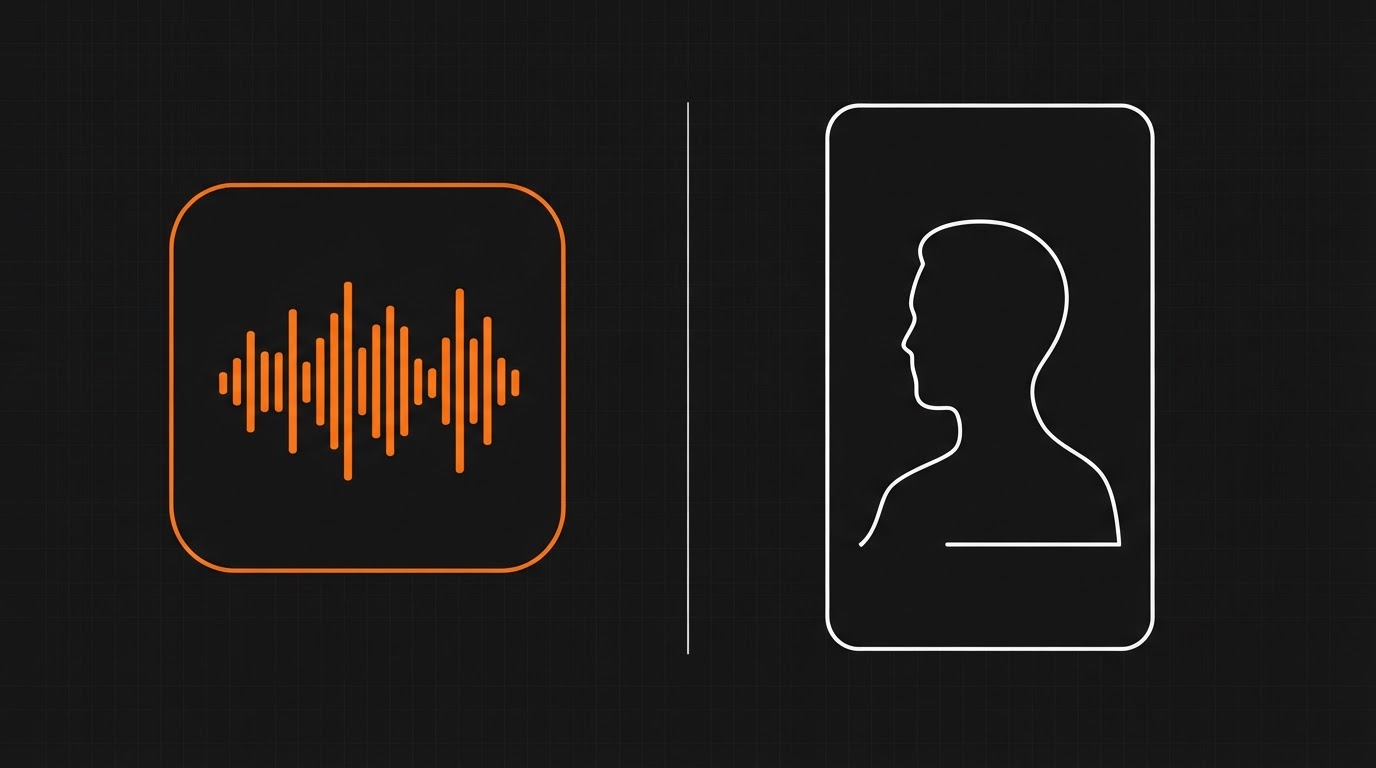
The voiceover-versus-on-camera question is usually framed as confidence — as though faceless content is what you do until you are brave enough to appear. That framing is wrong and it leads to bad decisions. They are different tools with genuinely different strengths, and the right choice depends on what the video has to accomplish.
What each format is actually good at
| Dimension | Voiceover | On-camera |
|---|---|---|
| Production time | 20–30 min per video | 45–90 min per video |
| Batching | Excellent — audio only | Good, needs one setup |
| Trust building | Slow, topic-led | Fast, person-led |
| Brand deal rates | Lower | Typically 1.5–2× higher |
| Reshoot cost | Very low — re-record audio | High — reset the whole shoot |
| Best content | Lists, research, comparisons | Opinions, reviews, demos |
| Caption dependence | High | Moderate |
Voiceover: throughput and reusability
The real advantage of voiceover is not anonymity, it is the reshoot cost. A wrong line in a voiceover video costs you 90 seconds of re-recording. The same mistake in an on-camera video costs you the lighting, the framing, the wardrobe and your energy. That difference compounds enormously across a month.
It also lets you publish content that would be awkward to perform: dense research, ten-item lists, numerical comparisons, step-by-step processes where the viewer needs to see the screen rather than your face.
On-camera: the trust premium
On-camera content builds a relationship faster because viewers form an impression of a person, not a channel. This matters commercially in a specific way: brands pay more for a recognisable face, because a recommendation from a person carries accountability that a voiceover does not. In our experience the gap in Indian brand deal rates between comparable faceless and on-camera creators is substantial — often 1.5 to 2 times for the same follower count.
Voiceover sells the information. On-camera sells the judgement. Brands pay for judgement.
Choosing per video, not per channel
The most effective accounts we see do not choose once. They choose per video, using a fairly simple test: does the recommendation depend on the viewer believing a specific person?
- Use on-camera when you are giving an opinion, reviewing something you paid for, disagreeing with common advice, or fronting a brand deal.
- Use voiceover when the video is a list, a comparison, a research summary, a screen walkthrough, or a process where hands and product matter more than a face.
- Use on-camera for the first five seconds and voiceover for the rest when you want trust and density in the same video — this hybrid is underused and works well.
- Use voiceover when you are testing a new topic area. If it performs, reshoot the winner on camera.
Why captions matter more for voiceover
In an on-camera video, a face carries tone, emphasis and emotional signal even on mute. Voiceover over B-roll has none of that. If the sound is off — which is the default in public — a voiceover video without captions communicates almost nothing.
- Word-level captions are close to mandatory for voiceover content, because they replace the emphasis a face would have carried.
- Keep the caption in the lower third and out of platform UI, since the viewer has nowhere else to look for meaning.
- For Hinglish voiceover, caption exactly what was said. Normalised English over Hinglish audio is jarring when there is no face to anchor it.
- Add slightly more visual change than you would on camera — a cut every two to three seconds — because there is no performance holding attention.
1.5–2×
brand rate premium on-camera
2–3×
voiceover production throughput
3–5s
on-camera intro for the hybrid
The India-specific considerations
- Language flexibility favours voiceover. Re-recording the same video in Hindi and English is straightforward; reshooting it on camera twice is not.
- Privacy is a genuine factor for many Indian creators, particularly women and people whose employers would object. Faceless is a legitimate long-term choice, not a stepping stone.
- Accent anxiety pushes people to voiceover, which is understandable but usually unnecessary — Indian audiences respond well to Indian English and to code-mixing.
- Family and workplace visibility concerns are real and worth respecting. A voiceover channel can reach significant scale without ever showing a face.
- On-camera is close to unavoidable if brand deals are your primary revenue plan.
A practical split
For a creator publishing four times a week and wanting brand revenue, roughly 70 percent voiceover and 30 percent on-camera works well. The voiceover content carries volume, search coverage and reach; the on-camera content builds the recognisable presence that makes the media kit work. Doing only one of the two leaves either the reach or the revenue on the table.
Frequently asked questions
Does faceless content perform worse?
Not on reach. Faceless content routinely performs extremely well on Reels and Shorts. It performs worse on trust-dependent outcomes such as brand rates and audience loyalty.
Can I build a large channel without ever showing my face?
Yes, and many do. Recognise that monetisation will lean towards products, affiliates and ads rather than face-led brand partnerships.
Should I worry about my accent on camera?
Very little. Indian audiences respond well to Indian English and to code-mixed delivery, and clarity matters far more than accent.
Is AI voiceover acceptable?
For informational content it is increasingly normal, provided the pacing is natural. For opinion and review content, a real voice performs better because the format is fundamentally about trust.
Do brands refuse faceless creators?
Not generally, but they price differently and often ask for a face for hero deliverables. Being able to offer both is the strongest commercial position.
Which format should a beginner start with?
Whichever gets you publishing weekly. Voiceover has a lower barrier, and switching to on-camera later is straightforward once you know which topics work.
Sources & further reading
- ASCI influencer advertising guidelinesDisclosure obligations that apply to both formats in India.
- Instagram CreatorsFormat guidance and monetisation surfaces for creators.
- W3C — captions and media accessibilityWhy captions carry more load when no speaker is visible.
- VerbCraft: what makes UGC feel authenticThe trust signals that apply whichever format you choose.
- VerbCraft: word-level captions vs subtitlesThe captioning approach voiceover content depends on.
- VerbCraft: pricing brand deals as a 50K creatorHow format affects what you can charge.
Use this article elsewhere
Copy a structured brief for ChatGPT, Claude, Perplexity or Gemini — it includes the key points and the canonical link so the assistant can cite VerbCraft properly.
https://verbcrafts.in/blog/voiceover-vs-on-camera-india